Noisy Garage Door Repair in Murfreesboro, TN
A garage door should hum, not grind, squeak or bang. We track the noise to its source, fix the worn part, and leave you with a door you can barely hear.
Same-day visits when the schedule allows · Options and costs explained up front
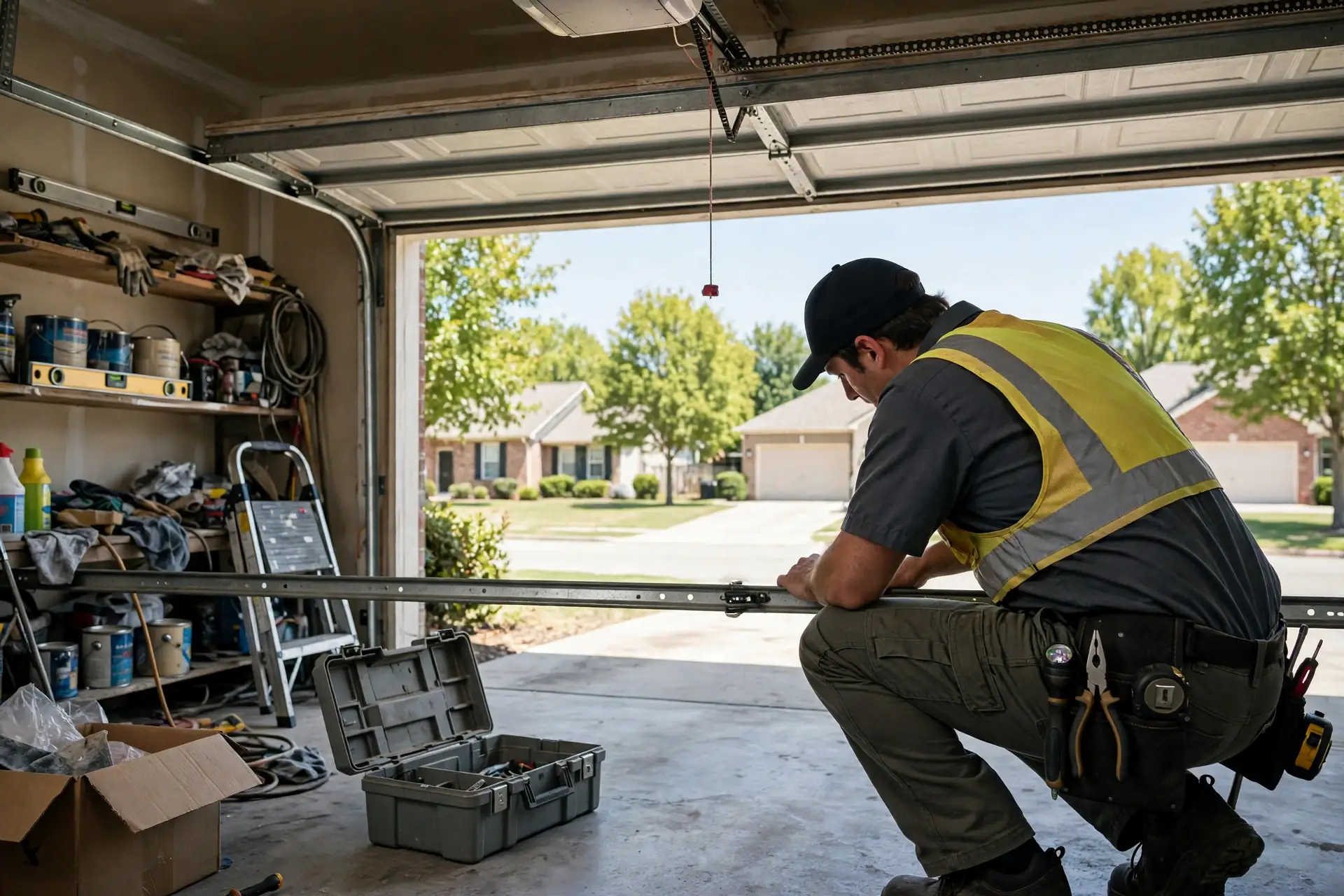
Every noise points to a different part
Direct answer: Most noisy doors can be quieted in one visit. We listen to the door through a full cycle to find whether the noise comes from dry or worn rollers, hinges, springs, or the opener drive, then fix that part. Lubrication helps dry parts, but worn rollers and failing gears need replacing.
A garage door talks before it fails. A squeak on every cycle, a grind as it passes the bend in the track, a bang when it stops, or a rumble that shakes the wall. Each sound points to a different part, and guessing wrong wastes money: spraying lubricant on a worn roller will not quiet it, and replacing an opener will not fix a dry hinge.
Murfreesboro's climate makes noise worse. Humidity around 70% and about 56 inches of rain a year rust steel rollers, hinges and springs, and once the first frost arrives around October 21 to 31, stiff lubricant and contracted metal make every worn part louder. We listen to the door through a full cycle, find the part that is actually making the noise, and fix that part, whether it is a ten-dollar roller or a tired opener drive.
Noises we hear most often
- Squeaking on every cycle, usually dry hinges or rollers
- Grinding as the door passes the bend in the track
- Banging or popping when the door starts or stops
- Rattling from loose bolts, brackets or track mounts
- A low rumble from the opener, often a worn gear or dry drive
- Scraping where the door rubs the track or the frame
For background on how garage doors and openers are built, see the Wikipedia guide to garage doors. The International Door Association also publishes maintenance guidance for the trade.
How we silence a noisy door
Rollers
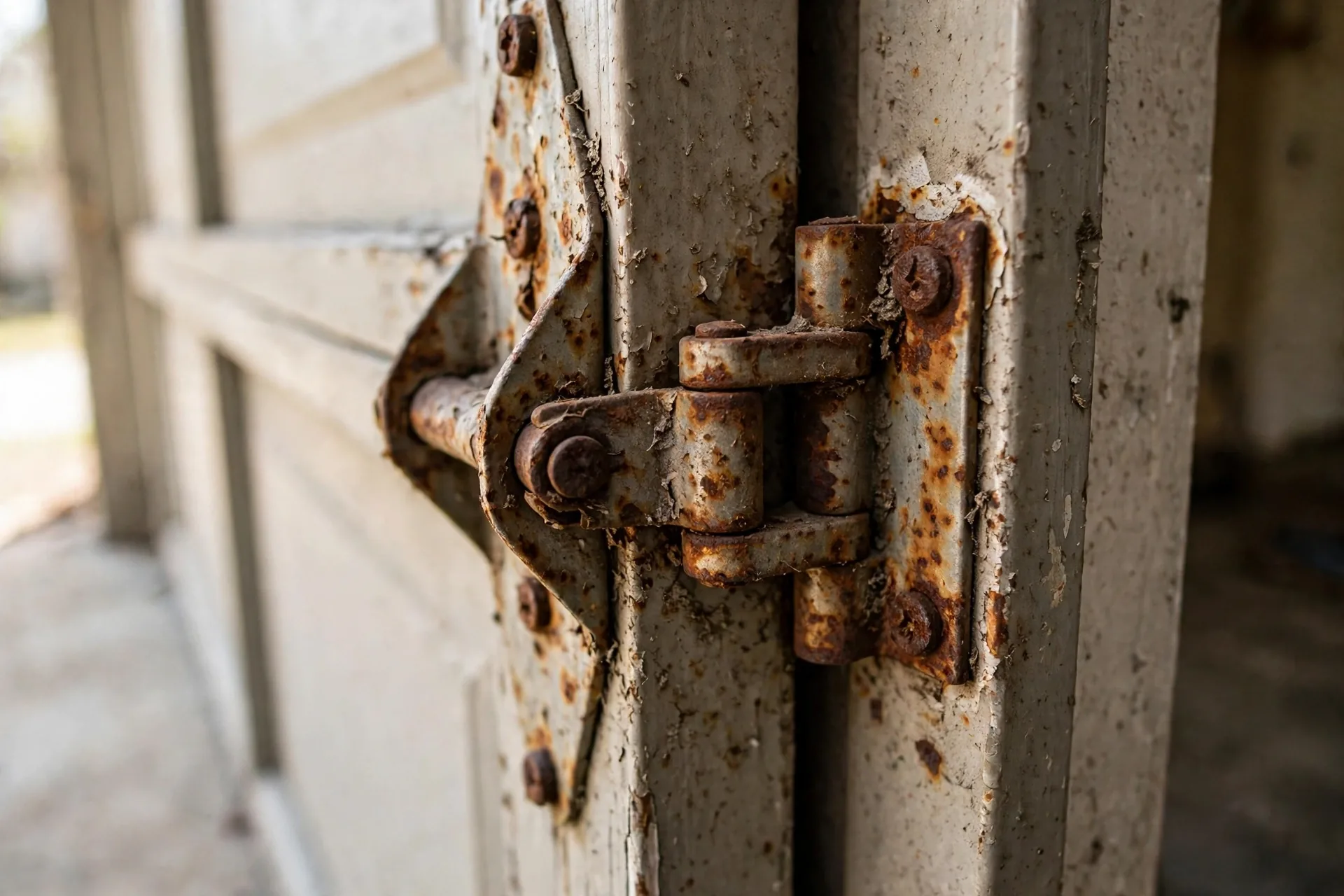
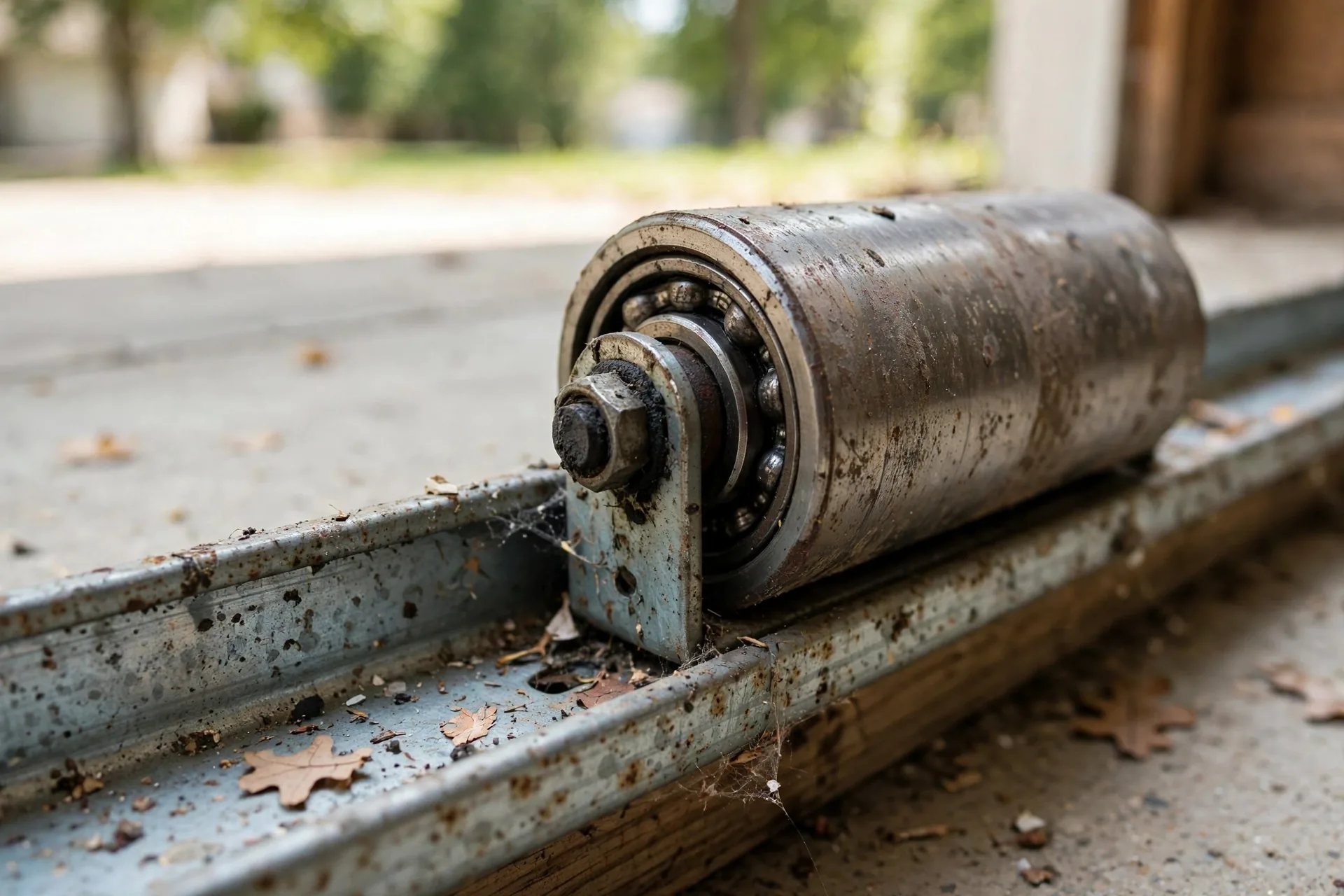
Worn steel rollers are the most common cause of grinding. We swap them for sealed-bearing nylon rollers, which run far quieter and do not rust the way bare steel does in Murfreesboro's damp air.
Hinges
Dry or cracked hinges squeak on every fold. We lubricate sound hinges and replace cracked ones, then re-square the door so the sections fold evenly instead of binding.
Springs
A popping or groaning spring is often dry or near the end of its life. We lubricate the coils, check the balance, and replace springs that are worn before they snap.
Opener drive
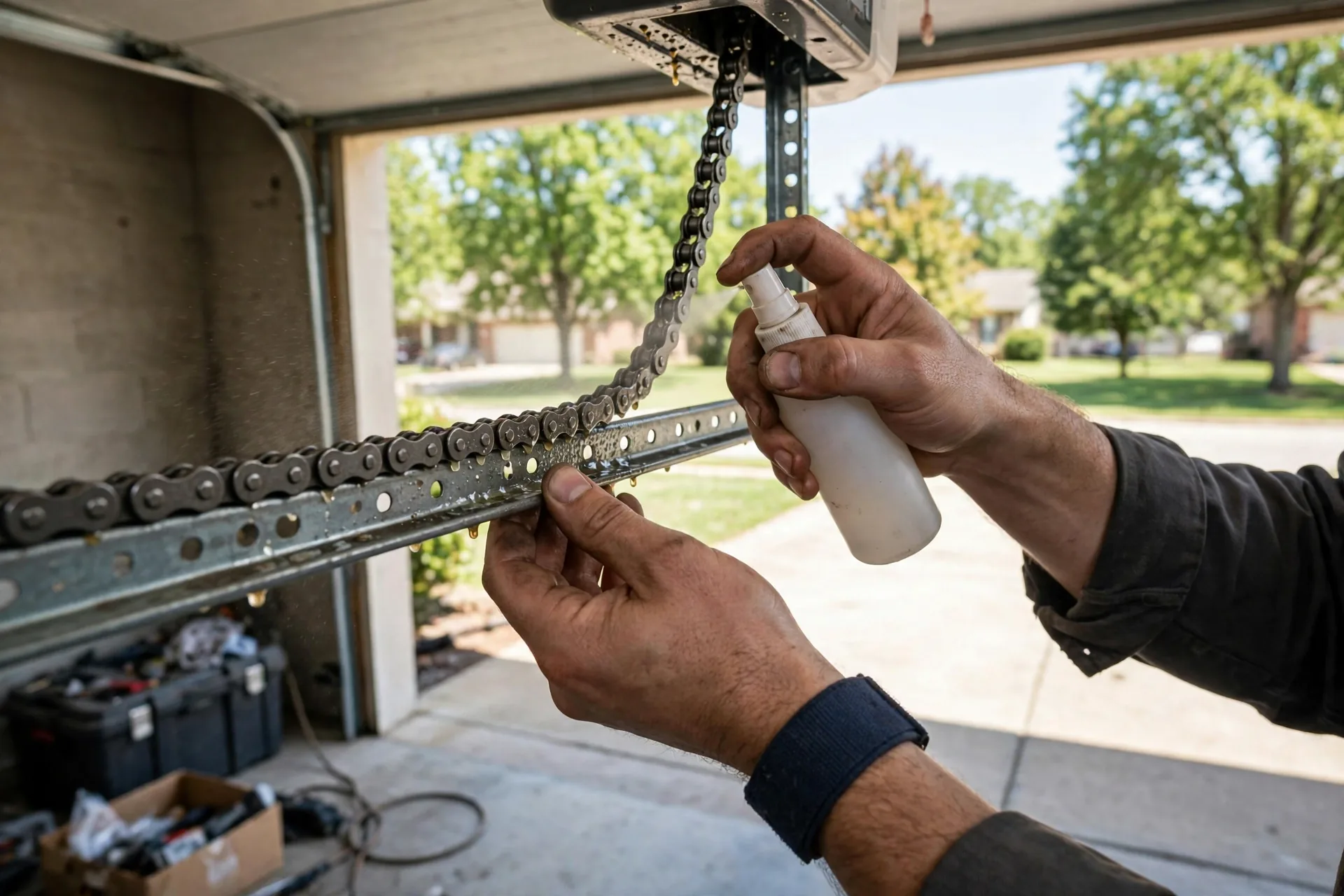
A rumbling chain drive may need tensioning and lubrication, or a worn gear may need replacing. If the opener itself is the problem, we will say so and quote the fix, not the whole unit, unless the unit is done.
Why a quiet door matters
- A noisy door is usually a wearing door. Fixing the noise now is cheaper than fixing the failure it warns about.
- We explain the options and the cost up front, and we do not push a new opener when a set of rollers will do.
- We service every make and model, from older chain-drive openers to new belt-drive and smart units.
- We work across Rutherford County, from Downtown in 37130 to Blackman and Salem in 37128.
What the noise usually means
Use this as a rough guide, then let us listen to the door in person. The same noise can come from two different parts, and the fix is different for each.
| Sound | Likely source | Usual fix |
|---|---|---|
| Squeak on every cycle | Dry hinges or rollers | Lubricate, or replace cracked hinges |
| Grinding at the track bend | Worn steel rollers | Replace with sealed-bearing nylon rollers |
| Bang on start or stop | Loose hardware or worn spring | Tighten mounts, check spring balance |
| Rumble from the opener | Worn gear or dry chain or belt | Lubricate drive, replace worn gear |
| Popping or groaning | Dry or fatigued spring coils | Lubricate coils, replace worn springs |
| Scraping along the track | Bent track or misaligned door | Straighten track, realign door |
Noise often gets worse in winter. Once the first frost arrives around October 21 to 31, lubricant thickens and metal contracts, so a door that was only a little noisy in September can sound rough by December. A tune-up before the cold arrives is the simplest way to keep it quiet.
Quiet doors across Murfreesboro
In the MTSU area (37130), student and multifamily housing along the Lascassas highways means garage doors cycle all day, and a grinding door in a duplex is a noise the whole building hears. Sealed-bearing nylon rollers are a popular fix there.
Downtown (37130), around the Public Square and the Rutherford County Courthouse, has older homes with older doors, and dry hinges and worn steel rollers are the usual suspects for the squeak that wakes the house.
In Blackman (37128), the west-side subdivisions built between 2003 and 2018 are now at the age where original steel rollers start grinding, and a roller swap plus a tune-up is the most common quiet-door job we do there.
We serve all of Murfreesboro, TN and Rutherford County, ZIPs 37127, 37128, 37129 and 37130. Call (615) 908-9290 to book a visit.
Frequently Asked Questions
Noise that appears suddenly usually means a part has just worn through or dried out: a roller bearing failing, a hinge cracking, or a spring coil going dry. It can also follow a cold snap, when lubricant stiffens. We listen to the door through a full cycle to find the part.
It helps if the noise comes from dry hinges, rollers or a dry opener rail. It will not fix worn rollers, a cracked hinge, a bent track or a failing opener gear. If lubrication does not quiet it in a day or two, the part needs replacing.
Squeaking is usually dry metal moving on metal, like a hinge or a roller stem. Grinding is usually wear, like a steel roller with a failed bearing dragging in the track. Squeaking is often a quick fix, grinding usually means a part needs swapping.
Yes, chain drives are noticeably louder, and they get louder as the chain dries out and stretches. If quiet matters and your chain drive is ageing, a belt-drive opener is the quietest option. Ask us when we look at the door.
Most noise jobs are finished in one visit. A roller swap or a lubrication and tightening service usually takes under two hours. If the opener drive needs a gear, we quote it first and only go ahead with your say-so.
It depends on the cause: lubrication and tightening costs less than a full set of rollers, which costs less than opener drive work. We explain the options and the cost before we start. Call for current details.
All Makes and Models Serviced
We repair and install garage doors and openers from the brands Murfreesboro homeowners already have — plus any other make or model.