Garage Door Safety Check: A Homeowner's Guide
A garage door is the heaviest moving object in most homes, and it runs over the heads of kids, pets and cars every day. Five checks, done twice a year, cover nearly everything that can go wrong. Here is how to run them, and what to do when one fails.
The Checks That Matter Most
Work through these in order, with the door clear and everyone out of the way. If any check fails, stop using the door until it is fixed.
Auto-reverse test
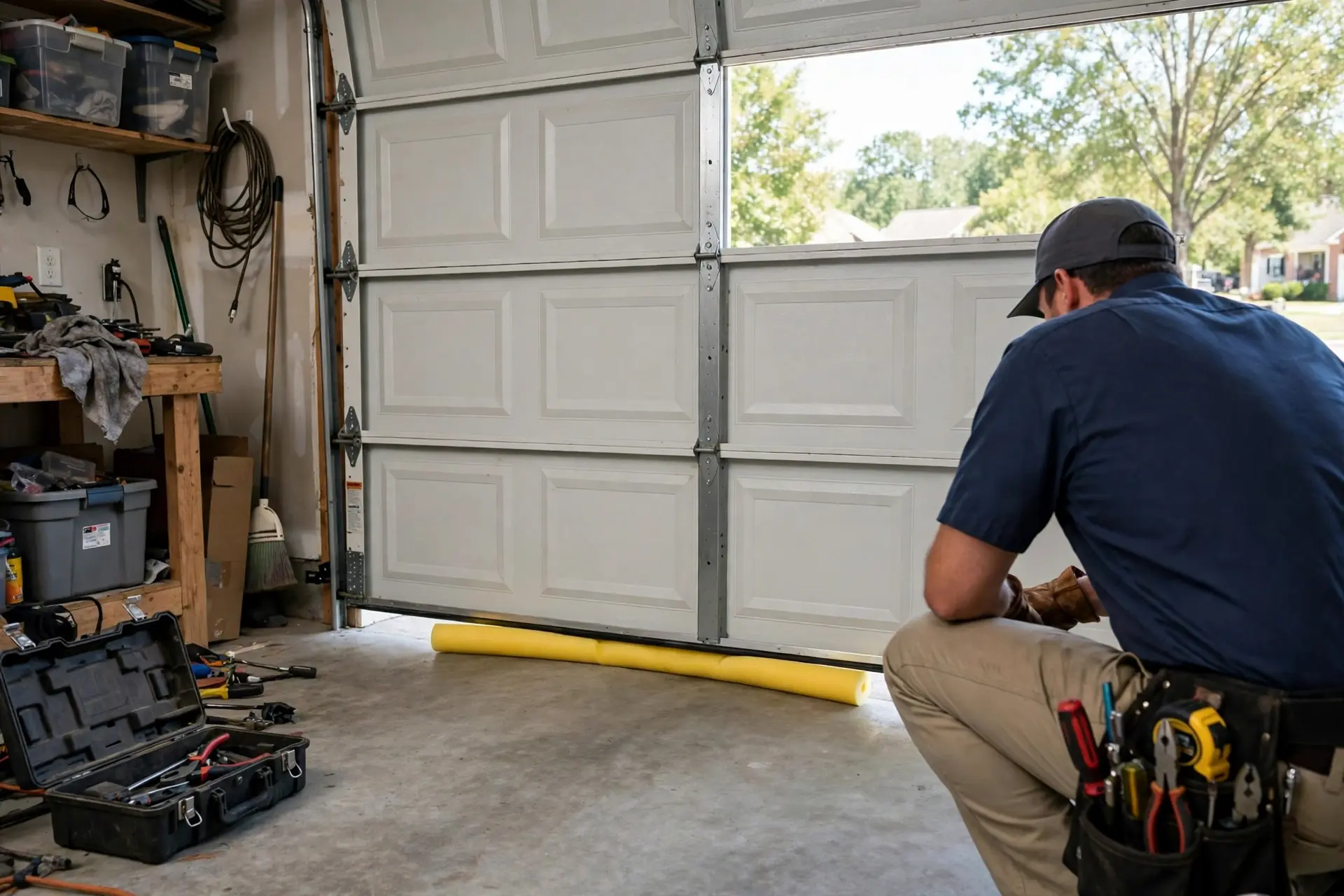
Place a roll of paper towels flat on the floor under the door. Close the door with the remote. It should touch the roll and reverse. If it keeps pushing down, the opener needs attention.
Photo-eye test
With the door open, wave a broom across the beam between the two sensors at the base of the tracks while the door is closing. It should reverse at once. If it does not, clean and realign the sensors.
Force setting check
Hold the door lightly as it closes, with your hand flat on the bottom panel. It should stop and reverse with modest pressure. A door that powers through your hand has its force set too high.
Spring and cable look
Stand back and look at the springs above the door and the cables at the sides. Look for a gap in a spring coil, rust, or frayed cable. Look only. Never touch, adjust or loosen a spring.
The Auto-Reverse Test, Done Right
This is the single most important safety check on a garage door, and it takes two minutes. Use a soft object, a roll of paper towels or a block of wood about two inches thick, never a hand or foot.
- Place the object flat on the floor in the centre of the doorway, under the door's path.
- Stand clear and close the door with the wall button or remote.
- The door should make contact and reverse back up within a second or two.
- If the door crushes the object or keeps pushing down, disconnect the opener and call for a garage door safety inspection before using the door again.
- Repeat the test once a year at minimum, and any time the opener has been serviced.
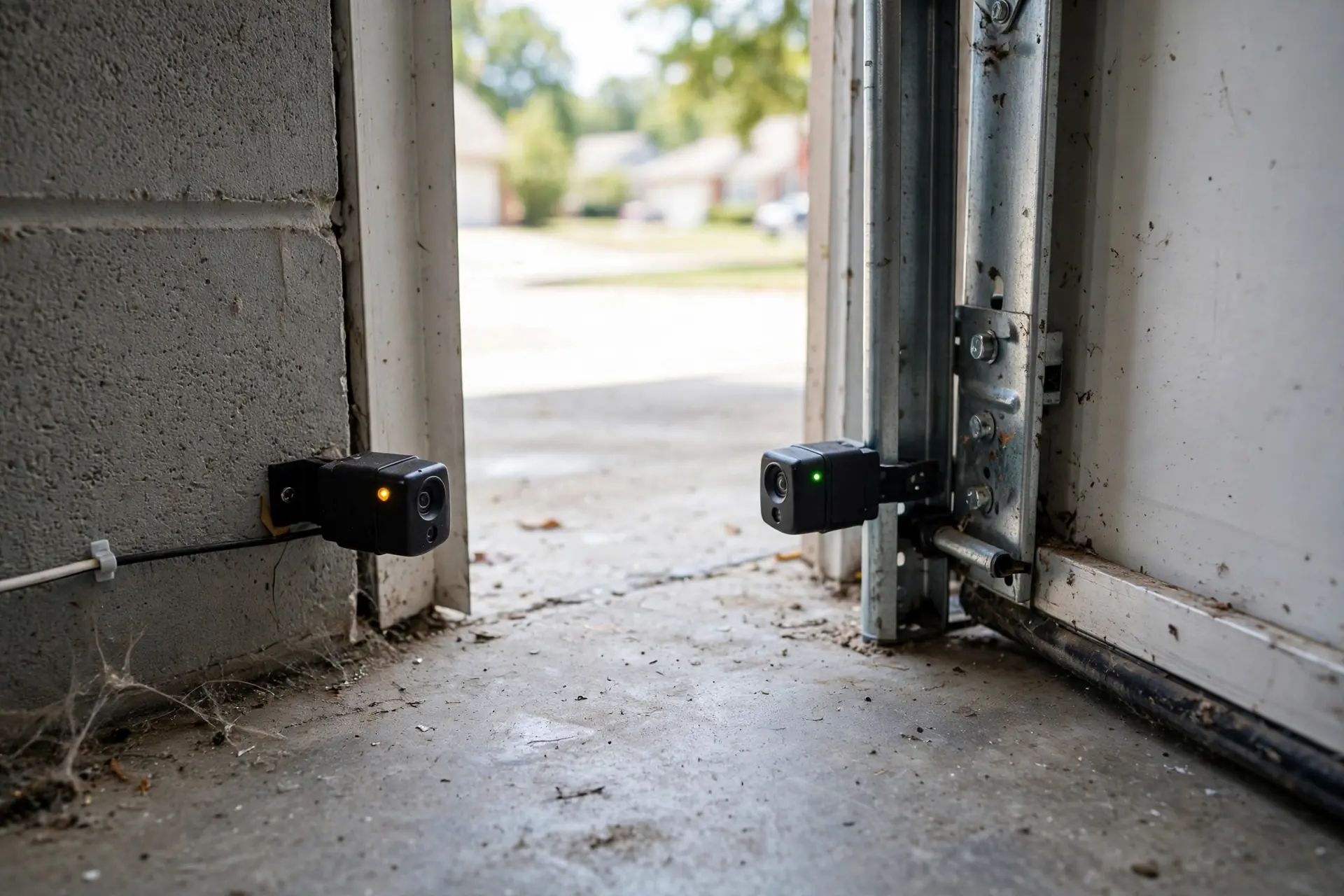
Photo-Eyes and Spring Containment
The photo-eye sensors sit about six inches off the floor on each side of the door. One sends an invisible beam, the other receives it. If the beam is broken while the door is closing, the door reverses. Both sensors should show a steady indicator light. A blinking light usually means the lenses are dirty or the sensors are out of line. Wipe the lenses with a soft cloth, then loosen the sensor bracket slightly, point it straight at its partner, and retighten. If the light still blinks, the wiring may be damaged and a sensor repair is the next step.
On springs, the check is visual only. Extension springs, the ones that run along the horizontal tracks on older doors, should have a safety cable running through them so a broken spring cannot fly across the garage. If the cable is missing or frayed, that is a pro fix. Torsion springs, the coil mounted above the door, should sit tight with no visible gap in the coil and no heavy rust. A gap in the coil means the spring has snapped, and the door should not be forced open. Call for emergency garage door service if the door is stuck open or shut with a broken spring.
Older homes around Downtown and East Main Street often still have original openers from the 1990s or earlier, some without working photo-eyes at all. If your opener has no sensors, or the auto-reverse does not work, the opener is overdue for replacement, not just a repair.
Kids, pets and the door
Keep remotes out of reach of small children, and mount the wall button at least five feet off the floor. Teach kids never to race under a closing door, and never to hang on the door or its handle. A door that reverses properly is the backup, not the plan.
Frequently Asked Questions
Place a roll of paper towels flat on the floor under the door, then close the door with the remote. The door should touch the roll and reverse back up within a second or two. If it crushes the roll or keeps pushing down, disconnect the opener and call a technician before using the door again.
The two sensors at the base of the tracks send a beam across the doorway. If anything breaks the beam while the door is closing, the door should reverse at once. Both sensors should show a steady indicator light. A blinking light usually means a dirty lens or a sensor knocked out of line.
Yes, if it is handled wrong. Torsion springs store a large amount of energy, and a spring that slips during adjustment can cause serious injury. Looking at a spring for a gap or rust is safe. Adjusting, loosening or replacing one is not a homeowner job.
Run the auto-reverse and photo-eye tests twice a year, in spring and fall, and any time the opener has been serviced or the door has been hit. Add the checks to your seasonal maintenance routine so they do not get forgotten.
All Makes and Models Serviced
We repair and install garage doors and openers from the brands Murfreesboro homeowners already have — plus any other make or model.
Call Murfreesboro Garage Door Rescue
Talk to a local technician about your garage door — same-day visits when the schedule allows. No forms, no waiting on email.
Mon–Fri 7AM–7PM · Sat 8AM–4PM · 24/7 Emergency