Garage Door Won't Close? Sensor Fixes That Work
It is late, the car is in the driveway, and it drops a foot and then rolls straight back up. Or it sits still while the motor lamp flashes. Before you reach for a toolbox, read the two little lamps low on the frame. They tell you where the trouble sits, and they decide whether this is a five minute wipe or a call to a pro.
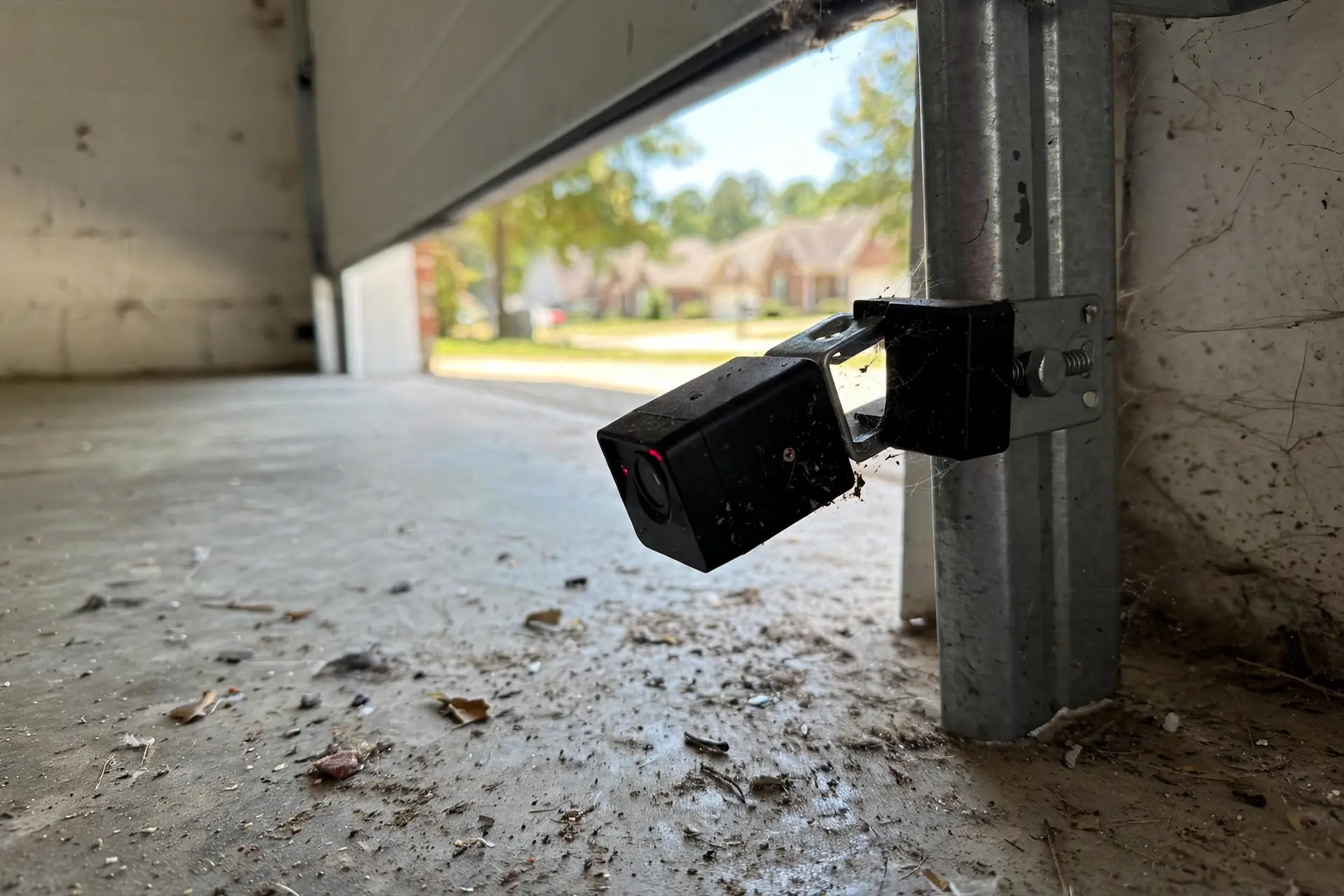
Short answer: work in order, and let the lamps lead. Look at both lamps first, then wipe the lenses, then check for low sun and webs, then straighten the bracket, then trace the cable. Stop at once if a cable is cut, it feels heavy by hand, or the lamps stay steady and it still refuses to move.
The Sensors, in Plain English
Low on each side of the frame sit two small boxes, about a handspan above the floor. One throws a ray you cannot see across the doorway. The other catches it. While that ray holds, it is allowed to close. Break the ray, with a foot, a box, a cobweb, or a shaft of evening sun, and the motor sends it back up. The boxes are a guard, not a gadget, so one that will not close is usually the guard doing its job on a false alarm.
Each box carries its own little lamp, and the pair of lamps is your fault code. Both lamps burning steady means the ray is holding and the trouble lies somewhere else. One lamp flickering means that side is dirty, loose, or staring into the sun. One lamp dark means that side has lost power or its cable is broken. Both lamps dark means the motor head is not feeding them at all, so look at the motor head itself before you touch the boxes.
Clean, Align, Check the Wiring
Step 1: clean the lenses
Take a soft, dry cloth and wipe both lenses, front and back of the little window. In Murfreesboro, spring pollen coats everything, summer dust blows in off the driveway, and a spider will happily string a web right across the beam overnight. Clear the web with the cloth, not a spray, and pick up anything leaning into the doorway: a bin, a bike wheel, a bag of leaves. Then try it. If it closes, you are done, and the lamps should both burn steady.
Step 2: check the alignment
Kneel down and look at each box square on. Both should sit level and point straight across at each other, not up at the ceiling or down at the floor. A knock from a trash can, a car mirror, or a mower handle is often enough to tilt one. Ease the bracket screw loose, nudge the box until its lamp burns steady, and pinch the screw back up without shifting the box. If the lamp only burns steady in the morning and flickers in the late afternoon, low sun is shining straight into the receiving box. A small hood of tape and card above the lens, or swapping the two boxes side to side, usually ends that one.
Step 3: check the wiring
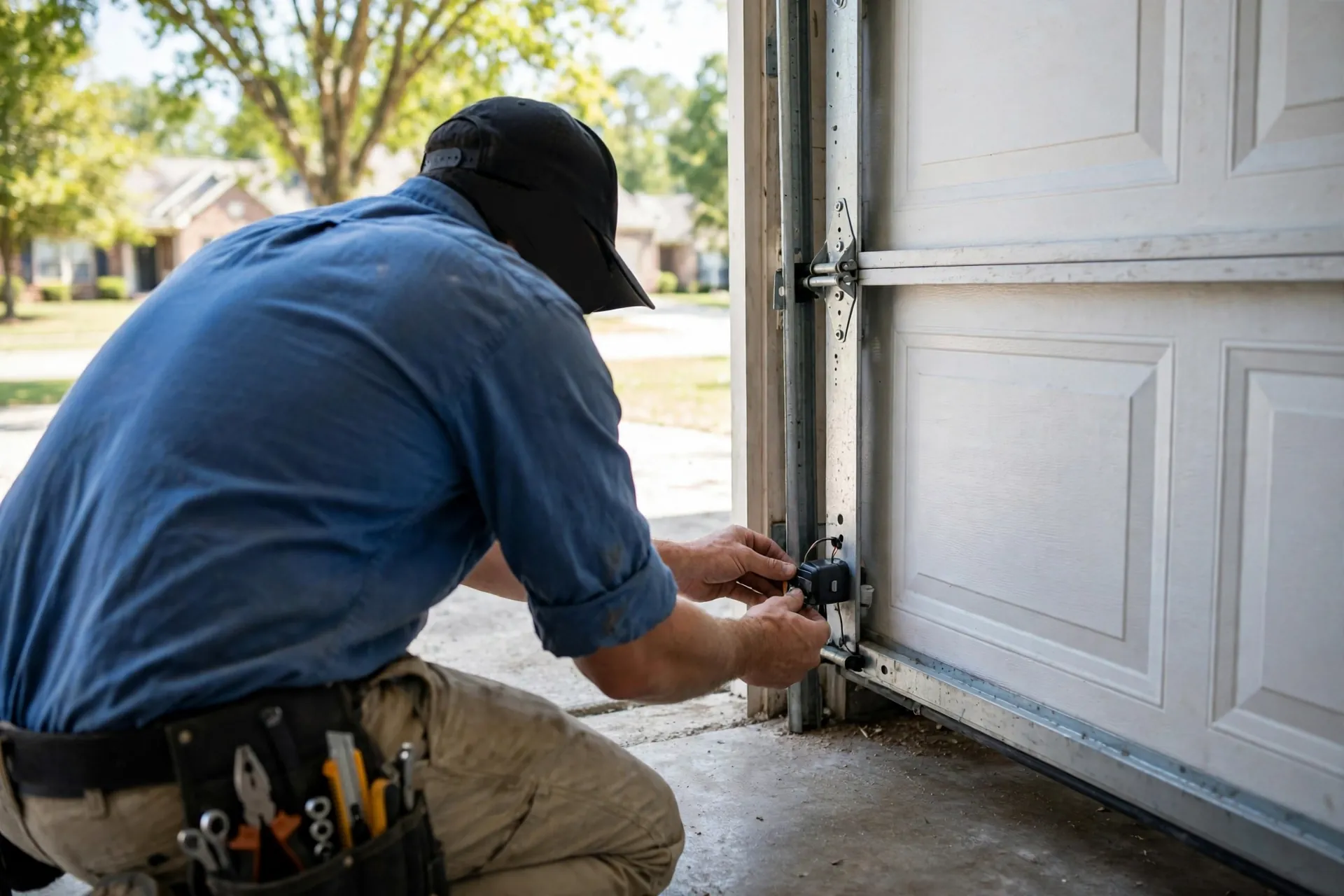
Run your eye along the thin cable from each box up the frame to the motor head. Look for a cable pinched where it bends around a bracket, rubbed raw where it crosses a sharp edge, or pulled out of its terminal by a tug. Mice chew these cables too, so look for tiny tooth marks near the floor. If you find a break or a bare copper thread, stop. Do not wrap it in tape and carry on. A sensor repair puts in a fresh run of cable and tests the guard properly.
When the Problem Is Something Else
If both lamps burn steady and it still will not shut, the guard is not the trouble, so move on. Look along the track for a stone, a screw, or a tool wedged in the channel, and check it is not catching on a mat or a hose. Then test it by hand: pull the red cord to free it from the motor, and lift. A sound one rises smoothly and stays put halfway. One that drops, drags, or needs two hands to lift has a spring or track trouble, and that is not a sensor job at all.
One that will not shut is also a house left open, so do not leave it till morning if you can help it. If the lamps check out and it still will not shut, call for garage door won't open or close service. If the door is stuck open after hours, emergency garage door service runs around the clock. For a full safety run-through, a safety inspection covers the beam, the auto-reverse and the springs in one visit. Homes in Barfield and The Gateway with newer motors often show the lamp state on the wall button as well, so you can read the trouble without kneeling down.
Frequently Asked Questions
The most common cause is a broken photo-eye beam. The door starts down, the opener thinks something is in the way, and it reverses. Clean both sensor lenses, check they point straight at each other, and look for anything blocking the doorway.
A steady light on both sensors means the beam is connected and the door should close. A blinking light usually means a dirty lens or a sensor knocked out of line. A light that is out entirely usually means a power or wiring problem.
Yes, sometimes. Low sun shining straight into the receiving sensor can overwhelm the beam, especially in the morning or late afternoon. A small shade over the sensor, or swapping which side the receiving sensor sits on, usually fixes it.
Loosen the bracket screw on one sensor, point it straight at the sensor on the other side, and watch its indicator light. When the light goes steady, the beam is connected. Retighten the screw gently without moving the sensor.
Call if both sensor lights are steady and the door still will not close, if a wire is damaged, or if the door is heavy or sticks when you lift it by hand. A door stuck open overnight is a security problem, so do not leave it until morning.
All Makes and Models Serviced
We repair and install garage doors and openers from the brands Murfreesboro homeowners already have — plus any other make or model.
Call Murfreesboro Garage Door Rescue
Talk to a local technician about your garage door — same-day visits when the schedule allows. No forms, no waiting on email.
Mon–Fri 7AM–7PM · Sat 8AM–4PM · 24/7 Emergency