Humidity and Rust on Garage Doors in Murfreesboro
Murfreesboro is a humid subtropical city, and your garage door feels it. Damp air, heavy rain and warm summers keep steel wet for long stretches, and rust is the slow result. Here is where it starts, what it does, and how to slow it down.
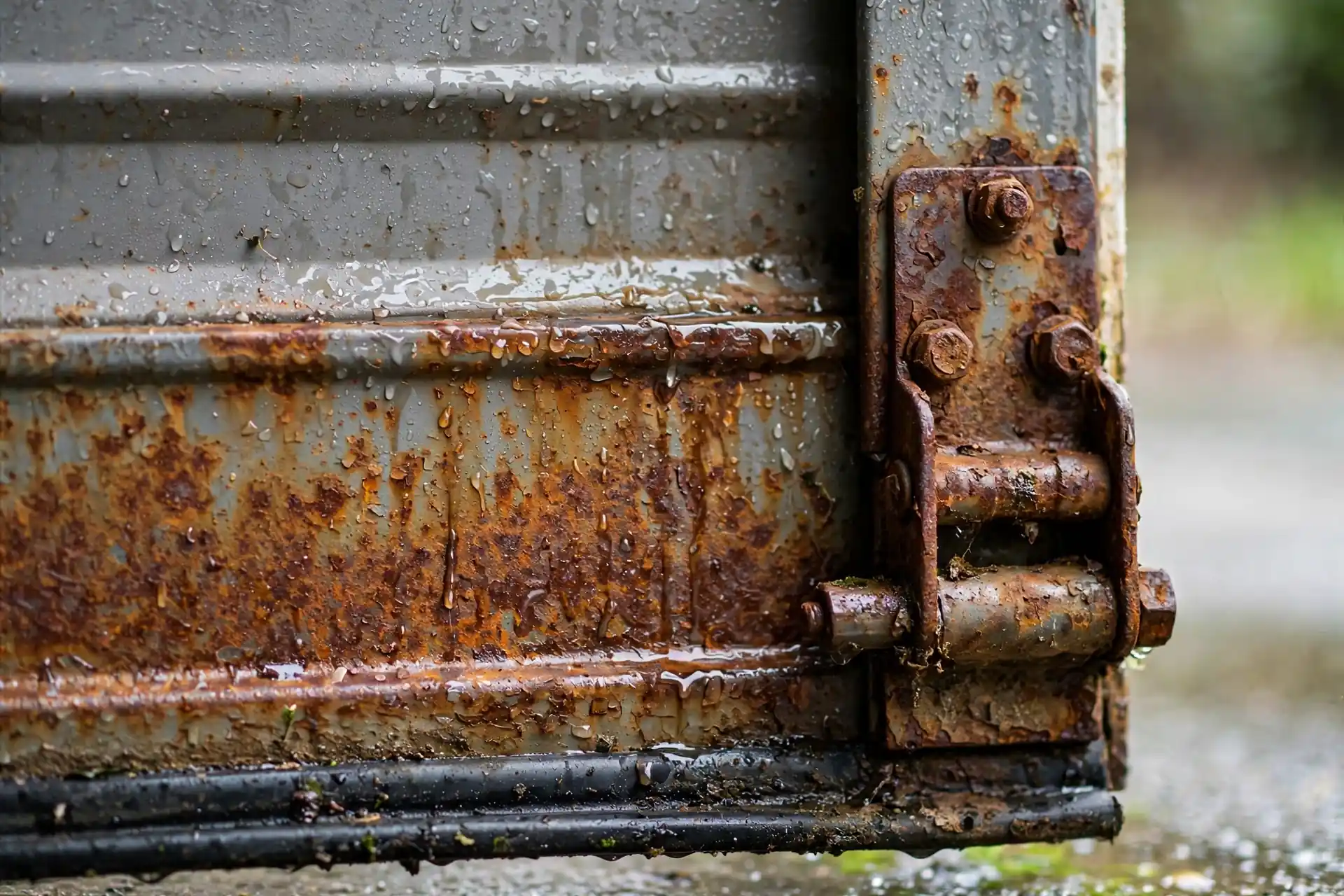
Short answer: Murfreesboro's humid subtropical climate, about 70% humidity and roughly 56 inches of rain a year, keeps steel doors, springs and hardware damp for long stretches. Rust starts at the bottom panel, the hinges and the springs. Regular lubrication, clean seals and a yearly wash slow it down a lot.
Why Murfreesboro Is Hard on Steel
Murfreesboro sits in a humid subtropical climate, with hot, humid summers and about 70% humidity year-round. Rain falls in every month, around 56 inches a year, with June the wettest. A garage door lives outside in all of it, and the steel never really dries out in summer. Rust does not need a flood. It needs damp air, time, and a scratch in the paint.
The door's own design makes it worse. The bottom panel sits inches from wet concrete and splashback. Hinges and rollers trap moisture in their joints. Springs sit in a damp garage with little airflow. Each of those spots rusts on its own schedule, and each one shows up as a different problem.
Where Rust Shows Up First
- Bottom panel. The lowest panel takes splashback from the driveway and sits against a damp concrete floor. Look for bubbling paint and orange staining along the bottom edge.
- Hinges and rollers. Rust in a hinge joint makes the door stiff and noisy. Rust on a roller bearing makes it grind instead of roll.
- Springs. Rust pits the coil, and a pitted coil is a weaker coil. Springs in damp garages wear out sooner than springs in dry ones.
- Lift cables. A rusty cable frays faster, and a frayed cable is a safety problem, not a cosmetic one.
- Track bottoms. Rust and grit at the bottom of the vertical tracks make rollers drag and stick.
Prevention That Actually Works
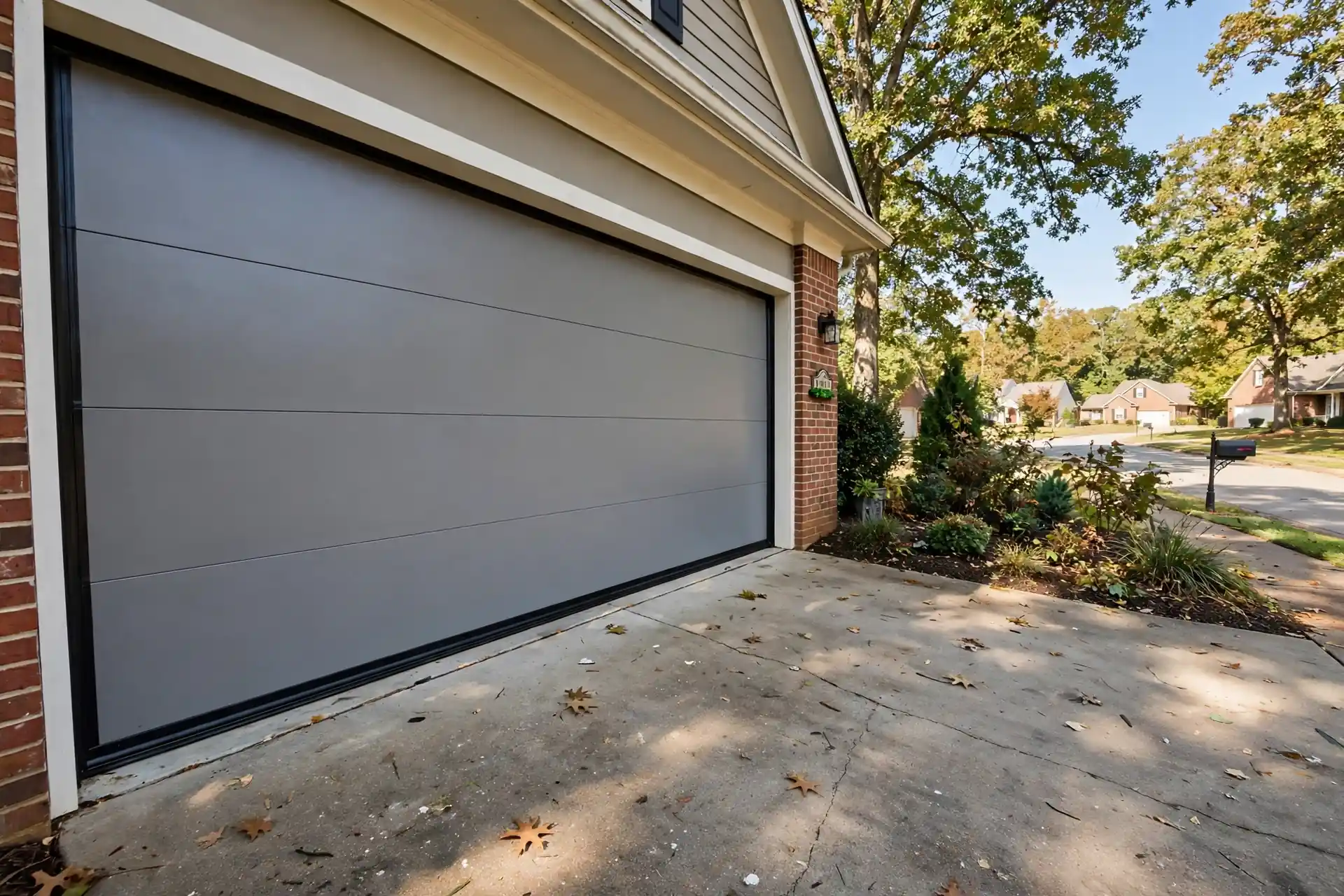
Four habits cover most of it. Wash the door once a year with mild soap and water, and touch up any paint chips before rust gets under the paint. Lubricate the hinges, rollers and springs every six months with a silicone-based spray, which pushes moisture out of the joints. Keep the bottom seal in good shape, since a cracked seal lets rain and damp air under the door all year. And keep the garage ventilated when you can, since a closed, damp garage rusts hardware faster than an open one.
When rust has already taken hold, the answer depends on where it is. Surface rust on a panel can be sanded, primed and painted. Rust on hinges and rollers usually means replacement, since the part is already weakened. Rust through a panel, or heavy pitting on a spring, means the part is done. A maintenance and tune-up catches all of this in one visit, and a panel replacement can save a door when only the bottom panel has gone. Homes in Salem and Blackman with larger lots and more exposed driveways tend to see bottom-panel rust first, so check the lowest panel each spring. For the seasonal routine, see our garage door maintenance checklist. The Murfreesboro page on Wikipedia has the full climate picture behind these numbers.
Frequently Asked Questions
Yes. Murfreesboro averages about 70% humidity with rain in every month, so steel doors, springs and hardware stay damp for long stretches. Rust starts at the bottom panel, the hinges and the springs, and it works faster on scratched or unpainted steel.
Spray the coils with a silicone-based garage door lubricant every six months, in spring and fall. Lubrication pushes moisture out of the coil and slows rust. It cannot restore a spring that is already heavily pitted, but it adds life to a sound one.
Surface rust on a panel can be sanded, primed and painted. Rust on hinges, rollers or cables usually means replacing the part, since rust weakens it. Rust that has eaten through a panel means that panel needs replacing.
Yes, when the paint is chipped or faded. Paint is the door's main defence against moisture. Touch up chips as soon as you see bare metal, and repaint the whole door when the finish is worn thin.
Once a year is enough for most homes, in spring. Use mild soap and water, rinse well, and pay attention to the bottom panel where grime and moisture collect.
All Makes and Models Serviced
We repair and install garage doors and openers from the brands Murfreesboro homeowners already have — plus any other make or model.
Call Murfreesboro Garage Door Rescue
Talk to a local technician about your garage door — same-day visits when the schedule allows. No forms, no waiting on email.
Mon–Fri 7AM–7PM · Sat 8AM–4PM · 24/7 Emergency