Noisy Garage Door? Causes and Fixes
Stand in the driveway and run it once, from shut to open and back, and just listen. Does it chirp at every joint, growl as it rounds the curve, or thud once at the end of its travel? The moment the noise shows up is the clue. This guide matches each racket to the piece that makes it, and to the moment that gives it away.
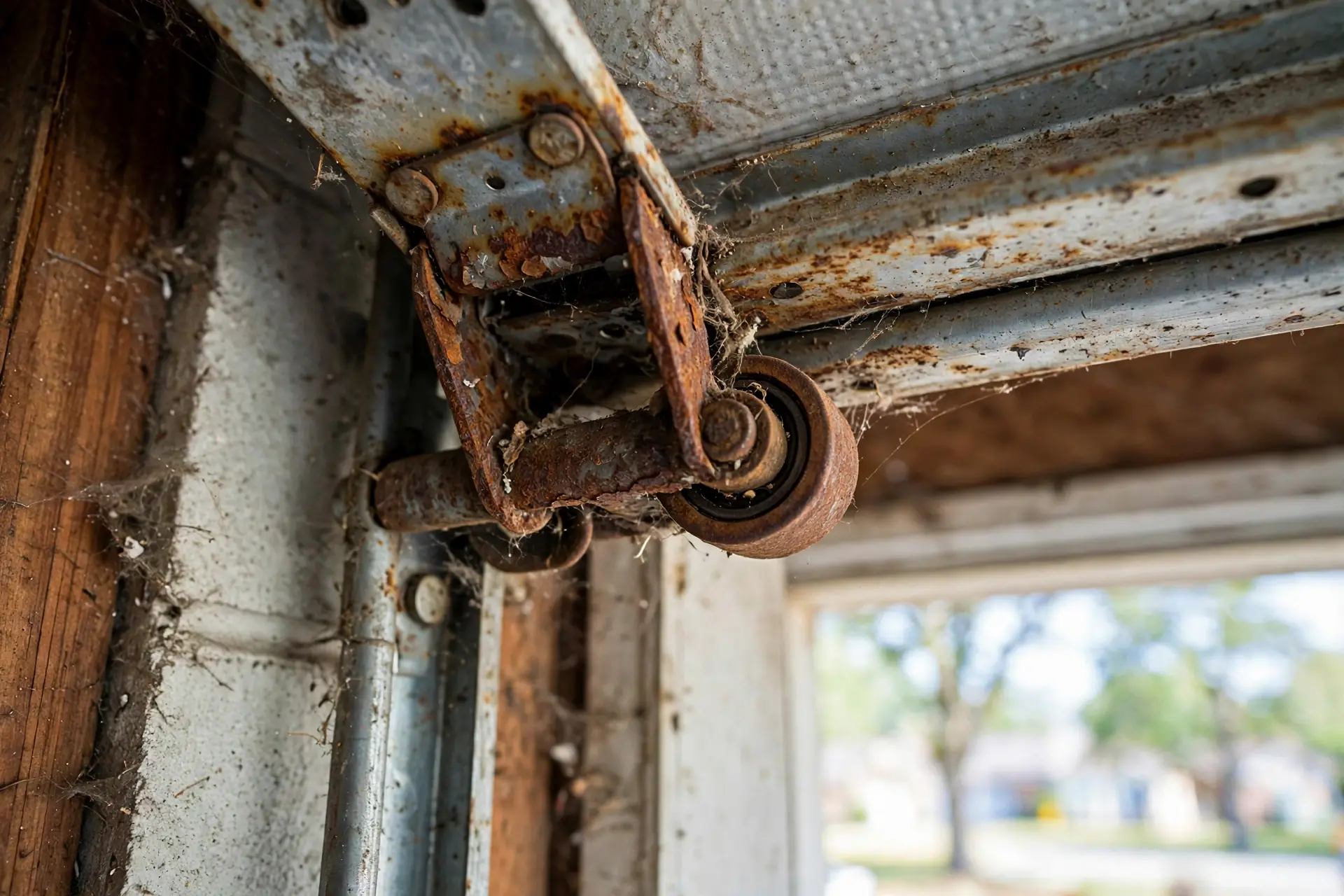
Short answer: chirps and squeaks usually mean dry metal, and a little oil often ends them. Growling, scraping, and popping usually mean a piece is tired or bent, and no amount of oil will bring it back. Note when the racket happens, at the start, at the curve, or at the end, and you have already narrowed it to one or two pieces.
What the Sound Tells You
| Sound | Likely cause | First check |
|---|---|---|
| High chirp, at every joint | Hinge pins and roller bearings running dry | Oil one hinge at a time and run it, so you learn which joint chirps |
| Low growl, as it rounds the curve | Wheels tired and flat, or a rail knocked out of true | Look for a flat spot on the wheels and a dent where the rail curves |
| Sharp pop, just as it starts | A coil shifting, or a hinge plate working loose | Look, do not touch, at the coil and the hinge screws, then call a pro |
| Loose rattle, all the way up | Bolts and brackets shaken slack, or a chain hanging loose | Press each bracket and snug the bolts with a socket wrench, a quarter turn at a time |
| Dull thud, as it seats | A section hitting the floor hard, or a tired bottom seal | Watch the last few inches of travel and check the seal for a flat spot |
| Motor hum, it stays put | Motor gears tired, or a coil that has let go | Free it from the motor and lift it by hand to test the weight |
The Checks You Can Do Yourself
- Run it once with everything else quiet, and mark the moment: start, curve, middle, or end of travel. That moment is half the diagnosis.
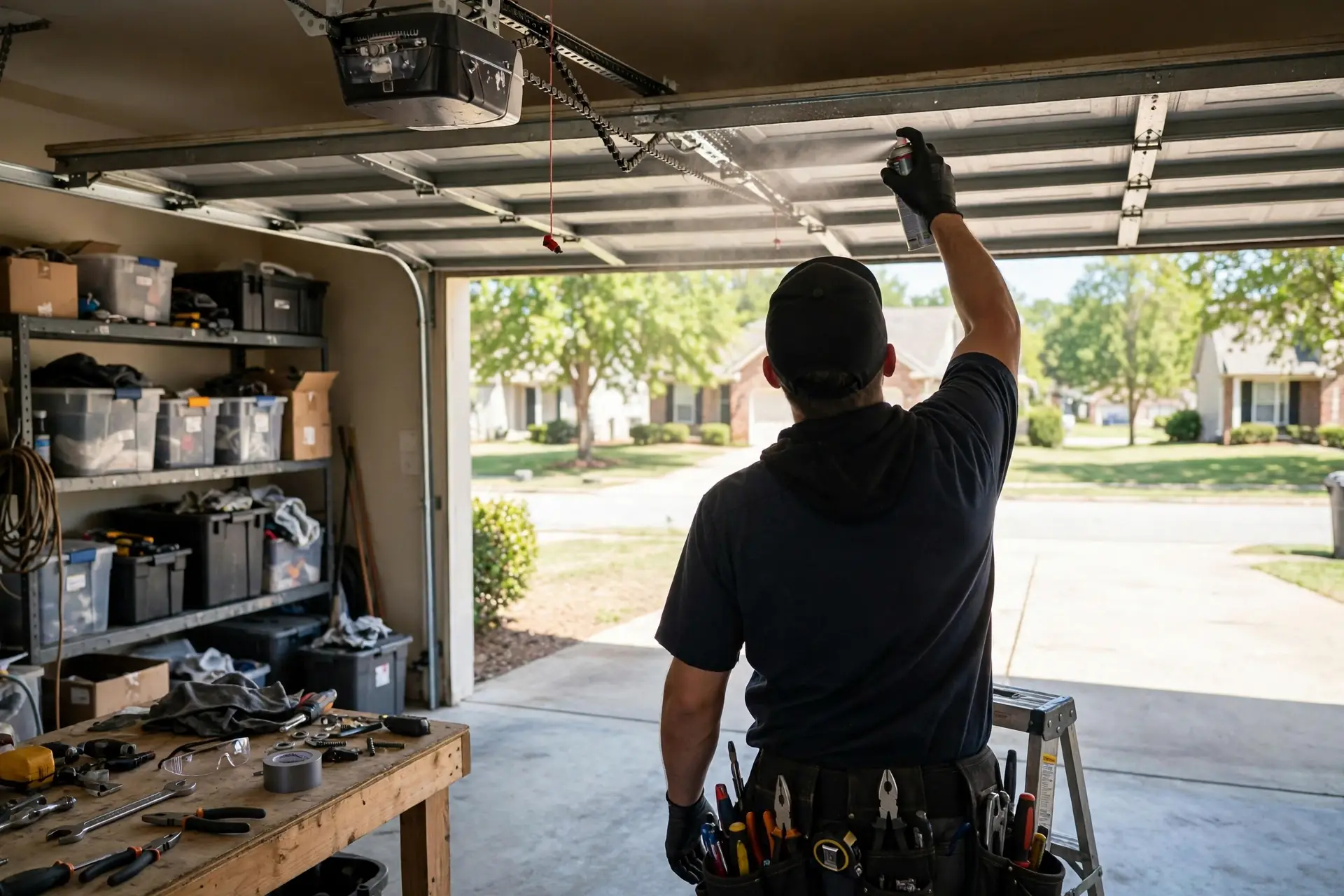
- Oil the hinge pins, the wheel bearings, and the coils with a silicone-based spray, one part at a time, and run it between each one so you can hear what changes.
- Look at the wheels. A wheel gone flat thumps once per turn, and a wheel with a chipped edge clicks. A full set of smooth wheels is a standard roller replacement job.
- Sight along each rail from the floor. A dent near the bottom, where a car tire or a bin has caught it, makes the wheels scrape at the same spot on every trip.
- Stand back and watch it fold. A section that jerks or lags behind the rest is binding on a bent hinge or a rail out of square, and that one needs a pro.
If the chirp fades after oiling, you are done. If the growl or the pop stays put, the piece is tired, not dry, and oil only buys it a few more trips. Older homes around Downtown and the MTSU area often still run on the steel wheels they were built with, and those are the loudest doors in the neighborhood.
When Noise Means Call a Pro
Call when oiling changes nothing, when it jerks or sticks halfway through its travel, or when the pop comes from above, where the coil lives. A motor that keeps growling can strip its own gears, and one that jumps in its rail can climb out of it altogether. A noisy garage door repair visit starts by tracing the sound to one part, then swapping that piece, whether that is the wheels, the hinges, or a tired coil. If the motor itself is the source, opener repair is the next step, and if several pieces are tired at once, our repair or replace guide helps you weigh a fix against a fresh door.
Frequently Asked Questions
A door that turns loud overnight usually has a part that just failed: a roller bearing that seized, a hinge that cracked, or a spring that lost tension. Lubricate the hinges and rollers first. If the noise stays, a part is worn and needs replacing.
Often, yes, if the noise is squeaking from dry hinges or roller bearings. Use a silicone-based garage door lubricant, not grease, and work the door a few times after applying it. Grinding or banging will not be fixed by lubrication alone.
Yes. Nylon rollers with sealed bearings run noticeably quieter than old steel rollers, and they do not rust. Swapping a set of steel rollers for nylon is one of the best value noise fixes on an older door.
It can be a warning sign. Popping from the springs, grinding from a bent track, or a door that jerks as it moves can all come before a breakdown. A noisy door is worth a look before it becomes a stuck door.
It depends on the part. A roller swap is a small job, while an opener gear repair is bigger. Lubrication and tightening cost nothing if you do them yourself. Call and describe the sound, and we will explain the options and the cost up front.
All Makes and Models Serviced
We repair and install garage doors and openers from the brands Murfreesboro homeowners already have — plus any other make or model.
Call Murfreesboro Garage Door Rescue
Talk to a local technician about your garage door — same-day visits when the schedule allows. No forms, no waiting on email.
Mon–Fri 7AM–7PM · Sat 8AM–4PM · 24/7 Emergency