Garage Door Safety Inspection in Murfreesboro, TN
Your garage door is the heaviest moving part of your house. A safety inspection checks the devices that stop it from hurting someone, and the hardware that keeps it from falling.
Booked around your day · Plain written report · Options and costs explained up front
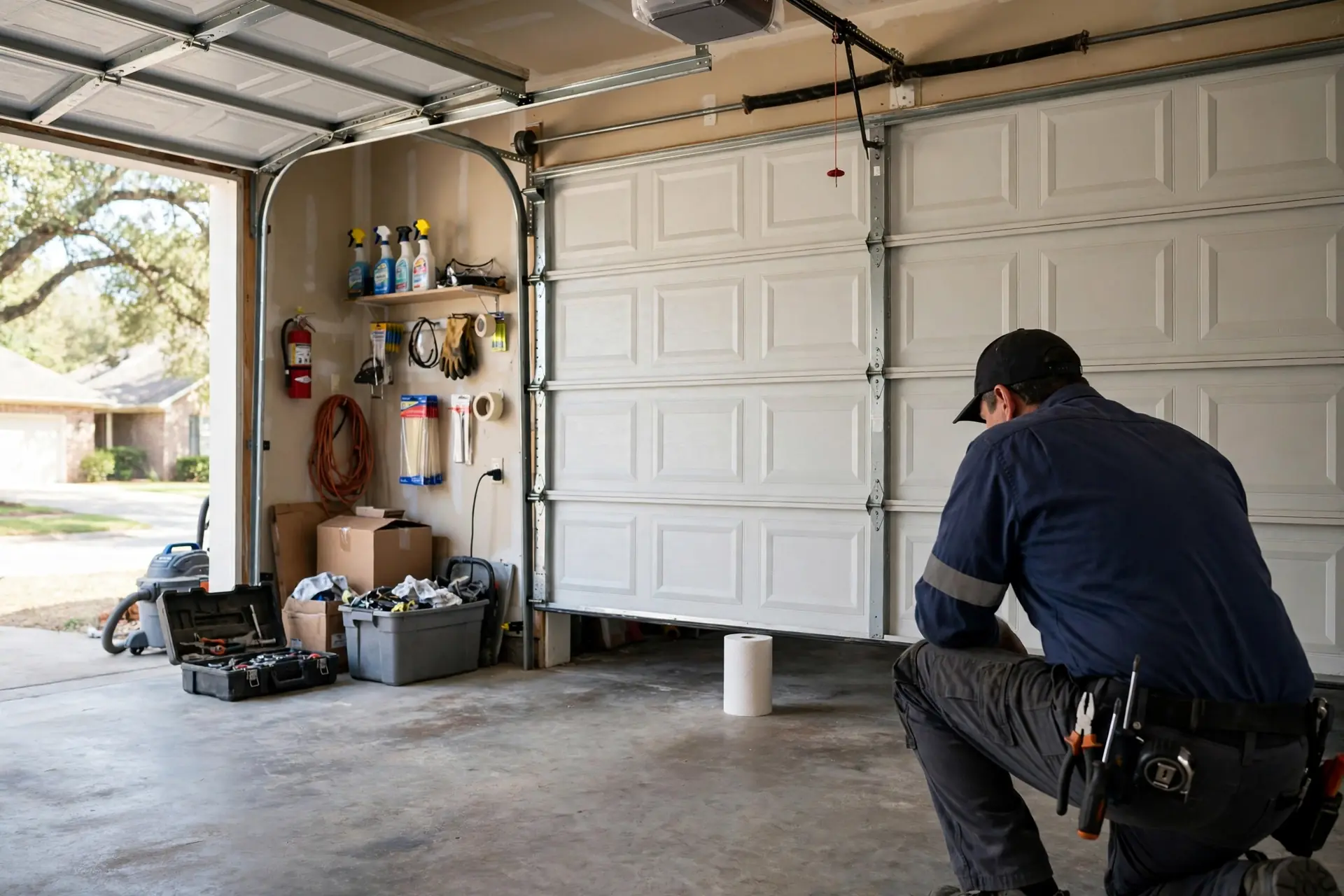
The parts that protect your family are the parts nobody sees
Direct answer: A safety inspection tests the auto-reverse, the force settings, spring containment, the manual release, and every hinge, cable, roller and track mount. We test each device rather than just looking at it, and you get a plain written report of what passed and what needs attention.
A garage door weighs a lot, and it moves on springs under serious tension. The safety devices that protect your family are small and easy to overlook: two photo-eye sensors the size of a thumb, a force setting on the opener, a containment cable through the spring. When they work, you never notice them. When one fails, the door can close on a child, a pet or a car, or drop without warning.
That is what the inspection covers. We test the auto-reverse with a soft object under the door, check the force settings, look at spring containment, test the manual release, and go over every hinge, cable, roller and track mount for wear. You get a plain written report: what passed, what needs attention, and what it will cost. It is especially worth doing if your opener is older, if you have young children, or if you have just moved into a home and do not know when the door was last checked.
Book an inspection if any of these apply
- Your opener is more than ten years old or has no photo-eye sensors
- You have young children or pets who play near the garage
- You just moved in and do not know the door's history
- The door has ever closed on something without reversing
- You can see rust, frayed cables or cracked hinges
- The door feels heavier than it used to when lifted by hand
The International Door Association publishes safety standards for garage doors and openers, and the Wikipedia guide to garage doors explains how the safety systems work.
What the safety inspection checks
Auto-reverse test
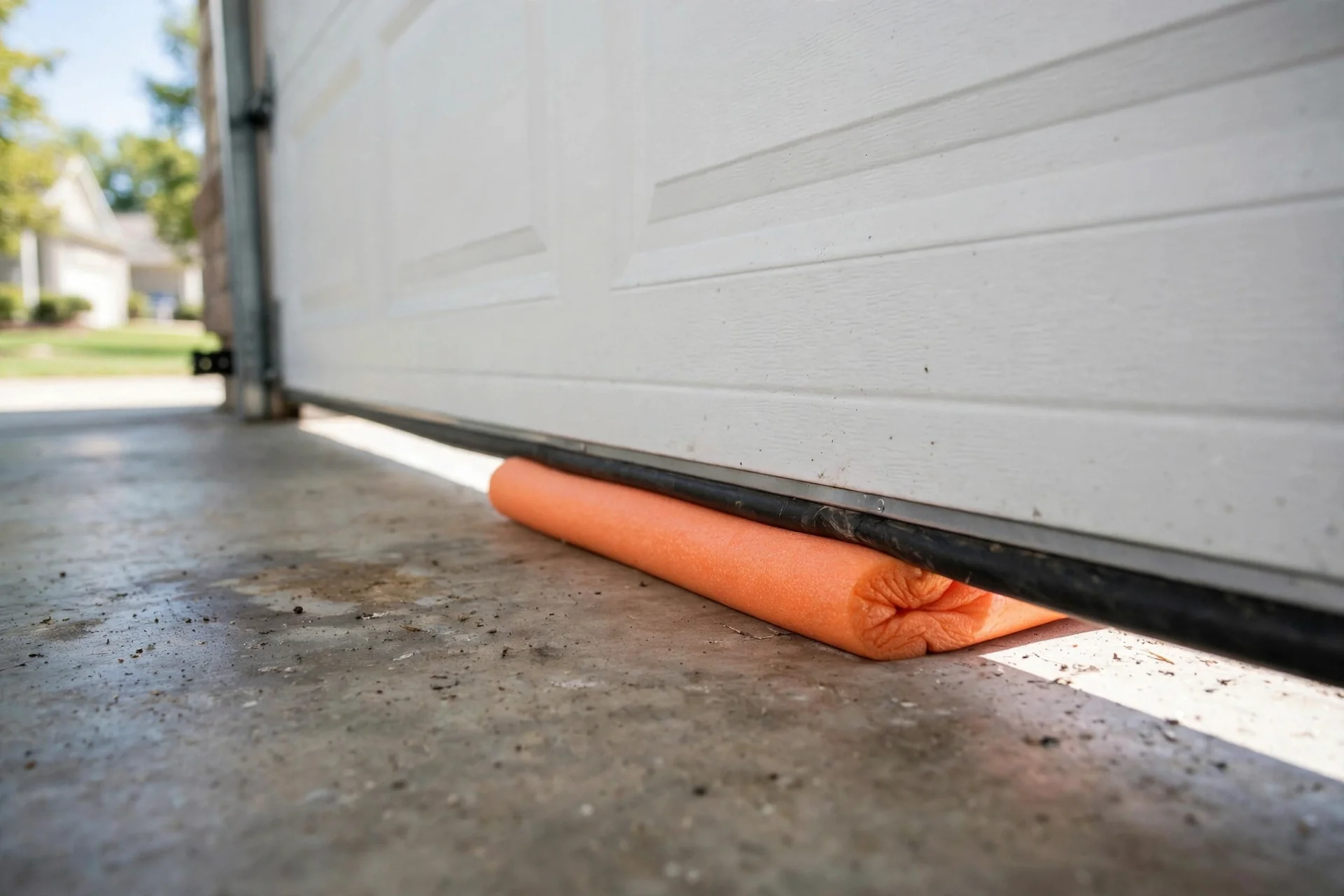
We place a soft object under the closing door and confirm it reverses on contact. A door that does not reverse is a door that can injure someone, and we flag it on the spot.
Force settings
We check the opener's down-force and up-force settings. Too much force means the door will not stop when it should; too little means it reverses for no reason. We set both correctly.
Spring containment
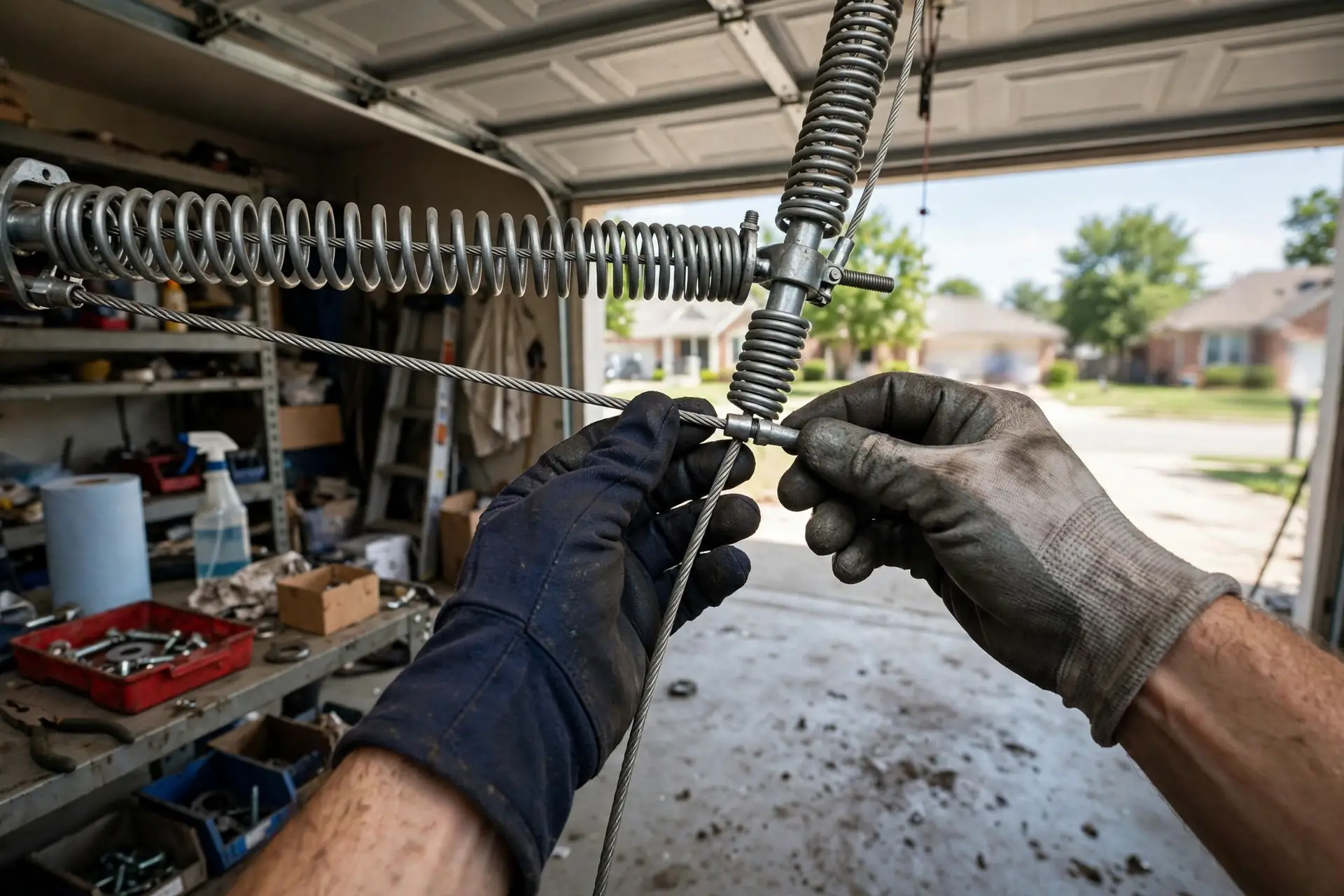
We check that torsion springs have a containment cable or a solid shaft, and that extension springs have safety cables through them. A spring that breaks without containment can fly across the garage.
Hardware check
Every hinge, roller, cable, bracket and track mount gets looked at for cracks, rust and wear. Murfreesboro's humidity, around 70% year-round, rusts steel hardware faster than most owners expect.
Why a safety inspection is worth an hour
- We test every safety device, not just look at it, so you know it actually works.
- We explain what we found in plain language, with a written report you can keep.
- We service every make and model, including older openers that predate modern safety sensors.
- We cover all four Murfreesboro ZIPs, 37127 to 37130, and the rest of Rutherford County.
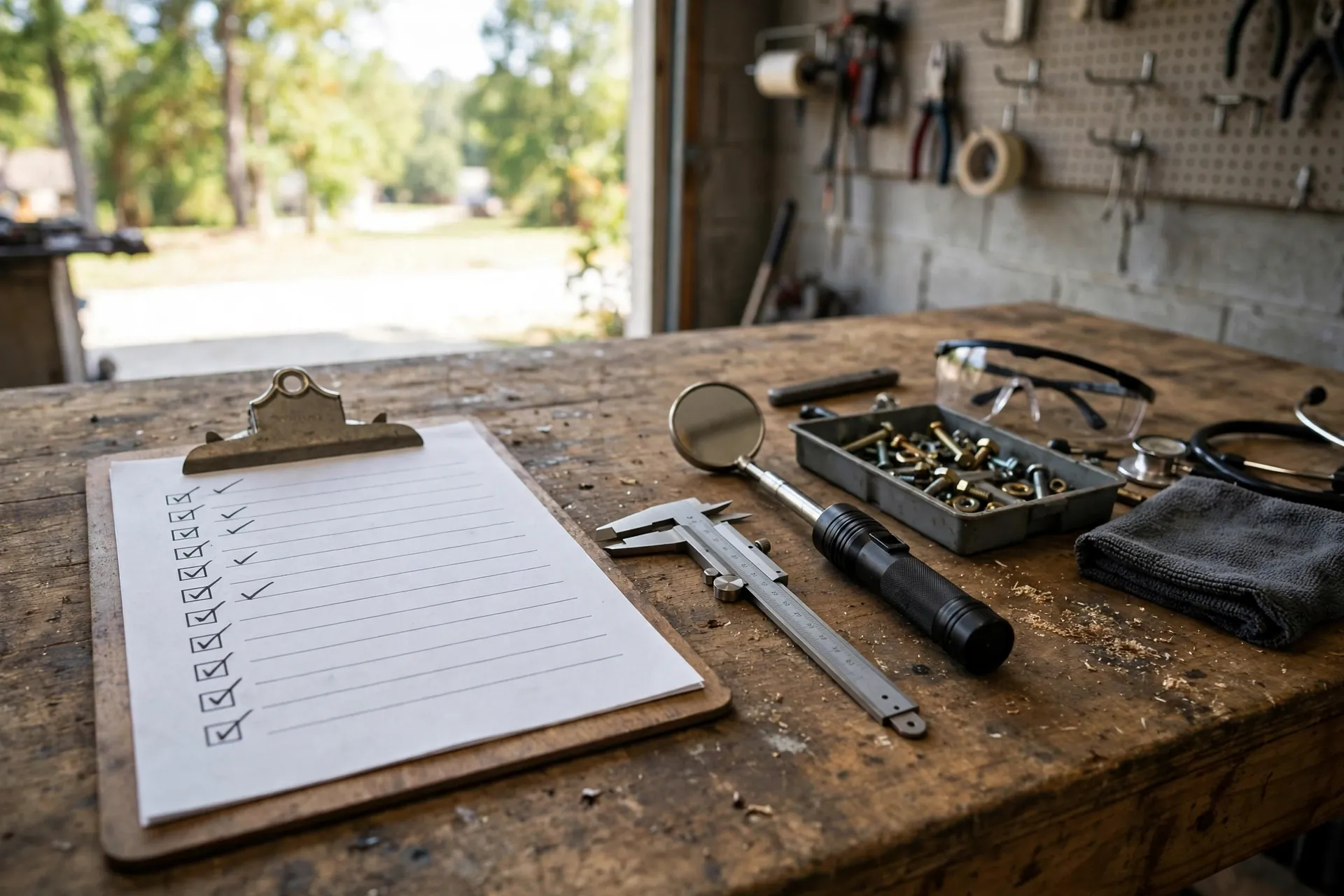
Inspection results: what passes, what fails
Here is how we judge each check. Anything that fails gets written up with the fix and the cost, so you can decide what to do next.
| Check | Pass | Fail |
|---|---|---|
| Auto-reverse | Door reverses on contact with a soft object | Door keeps closing or reverses only on hard contact |
| Photo-eye sensors | Both lenses clean, aligned, indicator lights steady | Blinking or dark light, door will not close |
| Force settings | Door stops with light resistance, reverses correctly | Door pushes through resistance or reverses constantly |
| Spring containment | Containment cable or solid shaft in place | No containment, or cable frayed and slack |
| Manual release | Cord pulls cleanly and door lifts by hand | Cord stuck, broken, or door too heavy to lift |
| Hardware | Hinges, cables and brackets sound, no cracks | Cracked hinge, frayed cable, loose bracket |
Older homes need this most. Around Downtown and East Main Street in 37130, where restored historic houses and Craftsman bungalows sit near the Rutherford County Courthouse and Oaklands Mansion, many doors still run on hardware that is decades old, and some older openers were installed before photo-eye sensors were standard. If your opener has no sensors at all, we will tell you straight and quote an upgrade.
Safety inspections across Murfreesboro
East Main Street (37130) has Late Victorian homes and Craftsman bungalows in the historic zone, where older doors and older openers are common. An inspection there often finds missing sensors or tired springs that need attention.
Downtown (37130), around the Public Square, has the oldest housing stock in the city, and many garages there have hardware that has never been formally inspected. A safety check is the sensible first step before any other work.
In Blackman (37128), the family-oriented west side with subdivisions like Blackman Farm and Berkshire, young children and busy garages make a working auto-reverse and clean sensors worth checking every year.
We serve all of Murfreesboro, TN and Rutherford County, ZIPs 37127, 37128, 37129 and 37130. Call (615) 908-9290 to book a visit.
Frequently Asked Questions
Once a year is right for most homes, and it pairs well with a tune-up. If your opener is more than ten years old, or you have just moved into a home, book one now rather than waiting for the annual round.
We place a soft object, like a roll of paper towels, under the closing door and check that it reverses on contact. We also test the photo-eye sensors by breaking the beam. Both tests take a few minutes and do not damage the door.
Yes. Modern safety standards require them, and a door without sensors will not stop for a child or a pet in the doorway. We can usually fit sensors to an existing opener, or quote a replacement opener if yours is too old to take them.
Yes, which is why the safety devices matter. A door that does not reverse, or a spring that breaks without containment, can cause serious injury. Keep children away from a moving door, and never let them play with the remote or the wall button.
Usually under an hour for a standard single or double door. If we find something that needs fixing, we quote it first and only go ahead with your say-so.
It depends on the door and whether anything needs fixing. The inspection itself is a straightforward booked visit, and any repairs are quoted separately. Call for current details.
All Makes and Models Serviced
We repair and install garage doors and openers from the brands Murfreesboro homeowners already have — plus any other make or model.